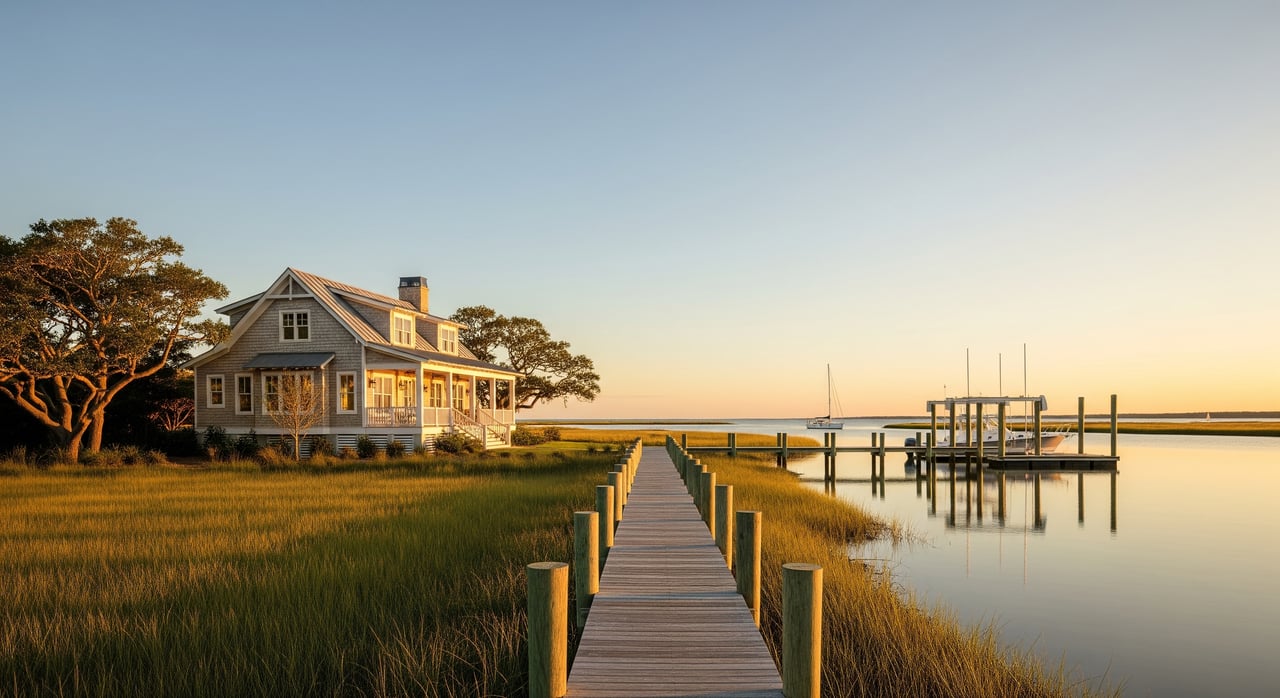
Is your Southport dream home right on the water or a short stroll to a community dock? It is a big decision. Each option offers a different balance of lifestyle, cost, maintenance, and risk. In this guide, you will learn how waterfront and water-access properties compare in Southport so you can buy or sell with confidence. Let’s dive in.
Waterfront vs. water-access defined
Waterfront means your lot touches navigable water like the Cape Fear River, tidal creeks, canals, or marsh edge. You often have private shore access and may be able to maintain a private dock or seawall, subject to permits and rights.
Water-access means you are not on the shoreline, but you have a way to reach the water. This could be a recorded neighborhood easement, a community dock or boat ramp, membership at a marina, or nearby public facilities. Access, rules, and maintenance depend on the documents that create those rights.
How Southport’s setting affects your choice
Southport sits at the mouth of the Cape Fear River with tidal influence, marshes, and nearby Intracoastal segments. Water depth, shoaling, and proximity to dredged channels shape what kind of boat you can use and whether a private dock is practical. Local marinas and navigation resources can help you understand channel conditions and typical boat sizes in different areas.
Storm surge and tidal flooding are real coastal factors. Properties may lie in FEMA Special Flood Hazard Areas like AE or VE zones, which affect insurance, construction requirements, and design choices. Elevation and distance from the shoreline often drive cost and risk.
Pros and cons at a glance
Waterfront benefits
- Immediate, private access to the water and usually the best views.
- Potential for a private dock or lift if rights and permits allow.
- Strong appeal for buyers who want true shorefront living.
- More control over shore maintenance and improvements.
Waterfront tradeoffs
- Higher purchase price and taxes compared with inland options.
- Higher upkeep: dock or seawall repairs, erosion control, and possible dredging.
- Greater exposure to flood and wind events, with stricter building standards and potentially higher insurance premiums.
- More complex permitting and environmental rules for any shoreline work.
Water-access benefits
- Lower purchase price for similar home size and finishes.
- Lower direct maintenance if a community or municipality maintains the dock or ramp.
- Often lower insurance exposure if the site is set back and higher in elevation.
- Flexibility to use marina slips or community facilities without owning a dock.
Water-access tradeoffs
- Less convenient access and possible distance to the water.
- Shared facilities may have fees, rules, waitlists, or boat-size limits.
- Access easements vary in quality and practicality, especially in marshy locations.
- Views and privacy are usually more limited than direct waterfront.
Cost, taxes, and insurance
Waterfront typically commands a premium in Southport and Brunswick County. The exact difference varies by neighborhood, view type, and the practicality of adding or using a dock. Compare recent local sales to quantify the premium for your target area.
Property taxes often reflect higher valuations on waterfront. In water-access neighborhoods with shared docks or ramps, confirm HOA dues and any special assessments for facility maintenance.
If a lender is involved, flood insurance is required for homes in FEMA Special Flood Hazard Areas. Premiums depend on flood zone, elevation relative to Base Flood Elevation, construction details, prior claims, and wind coverage. Private insurers and state wind pools can change their offerings over time, so get quotes for specific addresses. For properties with older docks or seawalls, condition and maintenance history may influence coverage and deductibles.
Permits and rules to know
Shoreline work is regulated. The North Carolina Coastal Area Management Act establishes rules and often requires permits for docks, bulkheads, shoreline stabilization, and dredging. In navigable waters, the U.S. Army Corps of Engineers may also be involved.
Locally, Brunswick County and the City of Southport issue building permits and enforce zoning, setbacks, and coastal construction standards. If wetlands or marsh buffers are present, extra protections and reviews can apply.
Before you plan a dock, boat lift, or seawall, expect to verify riparian rights, property lines relative to the mean high water mark, and any HOA restrictions. Many older structures were built under earlier rules and may be grandfathered, so check permits and as-built documentation.
Boat use and access logistics
For waterfront buyers, consider water depth at low tide, potential shoaling, and distance to a dredged channel. These details determine boat size and how often you can navigate without issue.
For water-access buyers, confirm the location and condition of the access point. Is there trailer parking at a ramp? What are the rules for community slips? Are there boat-size limits or seasonal restrictions? If you plan to rely on a marina, ask about slip availability and membership options.
Site and structure checks
If you are evaluating a waterfront home, ask a licensed marine contractor to inspect any dock or seawall. Check age, materials, condition, permit history, and past repairs. For major structures, a structural engineer opinion adds another layer of reassurance.
Elevation matters across Southport’s varied topography. A certified survey and Elevation Certificate help you understand insurance implications and any freeboard requirements. Even modest elevation differences can affect premiums and foundation choices.
Some older waterfront homes use septic systems or wells. Verify permits and compliance with local health rules, and confirm setbacks from the shoreline. Also check utility availability and any special conditions that affect improvements.
Title, HOA, and access rights
A title search should confirm riparian rights, recorded easements, and where ownership ends relative to the mean high water line. Owning the shoreline does not always include rights to submerged lands or the unrestricted ability to build. Navigation rights and public easements can shape what is allowed.
If you are buying water-access, review HOA covenants, recorded easements, and maintenance agreements in detail. You want clarity on who maintains the facility, how costs are shared, how access is prioritized, and whether guest use is allowed. For narrow or marsh-adjacent easements, make sure the access is practical and safe for your needs.
Resale and market factors
True waterfront tends to attract a specific buyer pool and can appreciate differently than inland property. After major storm seasons, pricing can be more sensitive in the short term as buyers reassess risk. Water-access homes often appeal to a wider group seeking a lower price point with boating convenience, which can help market liquidity.
If you are selling, present access type clearly. Provide dock and seawall records, permits, flood and claims history, and any community facility details. Accurate photography that shows distance and practical access builds buyer trust.
How to choose with confidence
Use the following framework to align your lifestyle and risk tolerance with the right property type in Southport:
- Choose waterfront if you value daily water access, private docking, and unobstructed views. You are comfortable with higher upfront cost, more maintenance, and potentially higher insurance.
- Choose water-access if you want boating and paddle access with a lower purchase price and less direct shoreline upkeep. You are okay with shared rules, possible waitlists, and a short drive or walk to the water.
- Prioritize elevation and flood zone in either case. Elevation, not just distance to water, often has the biggest impact on insurance and future resilience.
- Match boat plans to local depth and channels. Confirm practical docking and launching options for your intended vessel size.
- Factor in permitting. If your vision depends on a new dock or lift, understand the CAMA and Army Corps process early.
Buyer checklist for Southport
- Verify FEMA flood zone and request an Elevation Certificate if available.
- Collect permits, as-built drawings, and repair records for any dock or seawall.
- Hire a licensed marine contractor to inspect the shoreline structures; bring in a structural engineer for major walls.
- Confirm riparian rights and any submerged land or public navigation implications through a title company.
- Review HOA and easement documents for shared access: rules, maintenance, reserves, and slip allocations.
- Obtain current quotes for flood, wind, and homeowners insurance.
- Check local depth, tide range, and navigation constraints for your intended boat size.
- Ask the seller for a history of flooding, high-water events, and prior claims.
- Confirm septic, well, or utility details and compliance with local health rules.
- Ask about dredging history and any rights or obligations tied to canals or channels.
Seller checklist for Southport
- Disclose any known flood events, insurance claims, and shoreline work.
- Gather permits, plans, and contractor records for docks, lifts, and seawalls.
- If selling water-access, provide clear, recorded documents supporting the access rights and HOA maintenance responsibilities.
- Consider a pre-listing inspection of shoreline structures and address safety or repair items.
- Market access honestly with clear photography and descriptions of proximity, depth, and practical use.
The bottom line
In Southport, the best fit comes down to how you want to use the water, how much maintenance you want to handle, and how you weigh cost against convenience and risk. With the right due diligence on flood zones, access rights, permits, and dock conditions, you can buy a home that matches your lifestyle and holds its value over time.
If you are comparing specific properties or want a pricing read on waterfront versus water-access homes, connect with a local team that lives and breathes coastal real estate. For personalized guidance and a clear plan, reach out to The Waller Team.
FAQs
What is the main difference between Southport waterfront and water-access homes?
- Waterfront lots touch navigable water and may allow private docks, while water-access homes rely on shared or deeded access through community docks, ramps, or marinas.
How do flood zones affect buying in Southport?
- Homes in FEMA AE or VE zones often face stricter building standards and may require flood insurance; elevation relative to Base Flood Elevation can significantly impact premiums and design.
Can I add a private dock to a Southport waterfront home?
- Possibly, but you must confirm riparian rights and obtain approvals through coastal permitting programs and, where applicable, federal reviewers, plus comply with local zoning and HOA rules.
Are water-access homes cheaper to insure than waterfront?
- Often they can be, especially if they sit higher and farther from the shore, but premiums vary by elevation, construction, flood zone, and claims history; get property-specific quotes.
What should I review for a community dock or ramp in Southport?
- Read HOA covenants, easements, maintenance plans, reserve studies, and rules on boat size, slip assignments, guest use, and any special assessments.
What inspections are essential for Southport waterfront buyers?
- Have a licensed marine contractor evaluate dock and seawall condition and permits, and consider a structural engineer for major shoreline structures along with a standard home inspection.